Direct Rotary Drilling

Direct Rotary Drilling

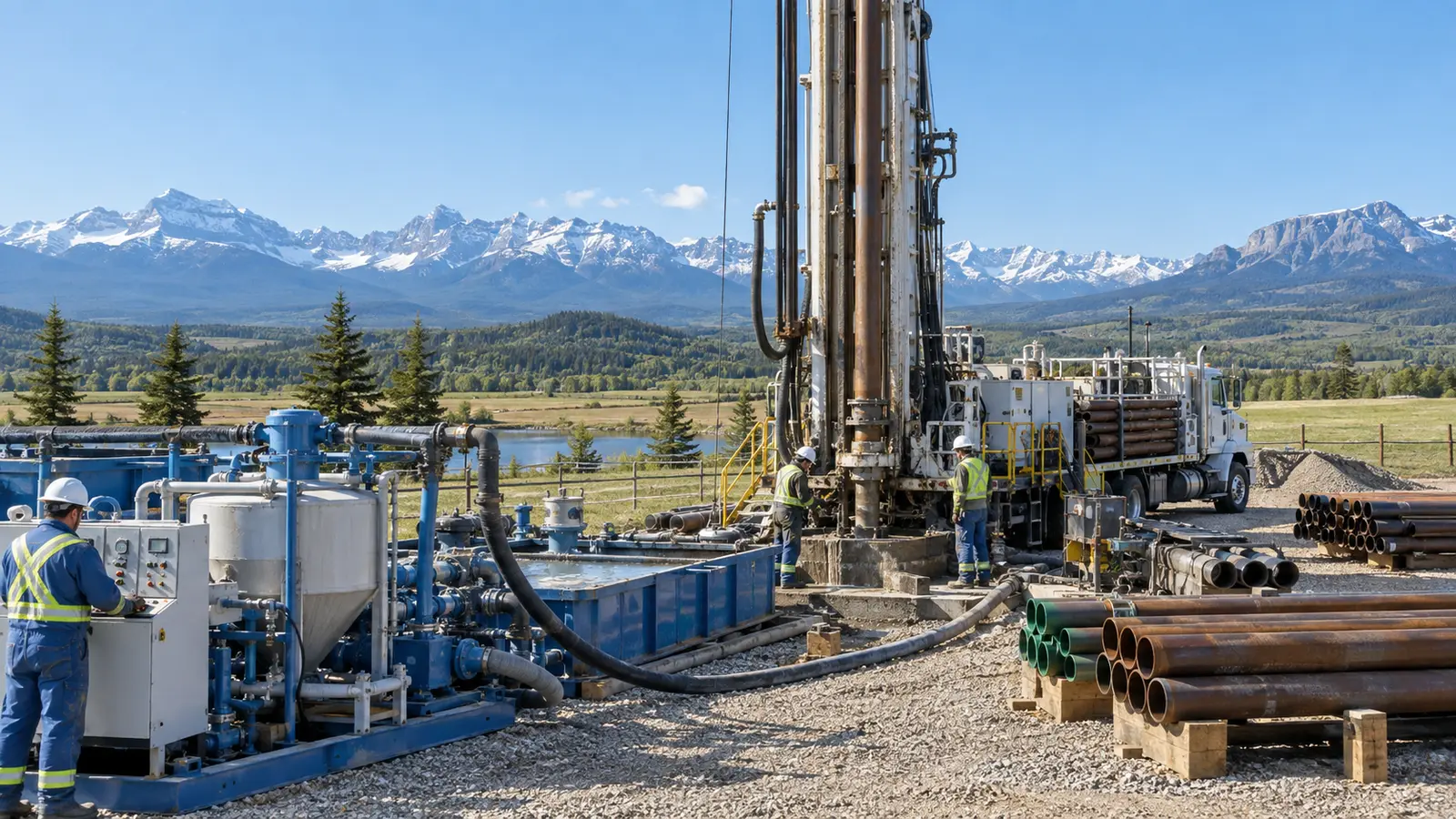
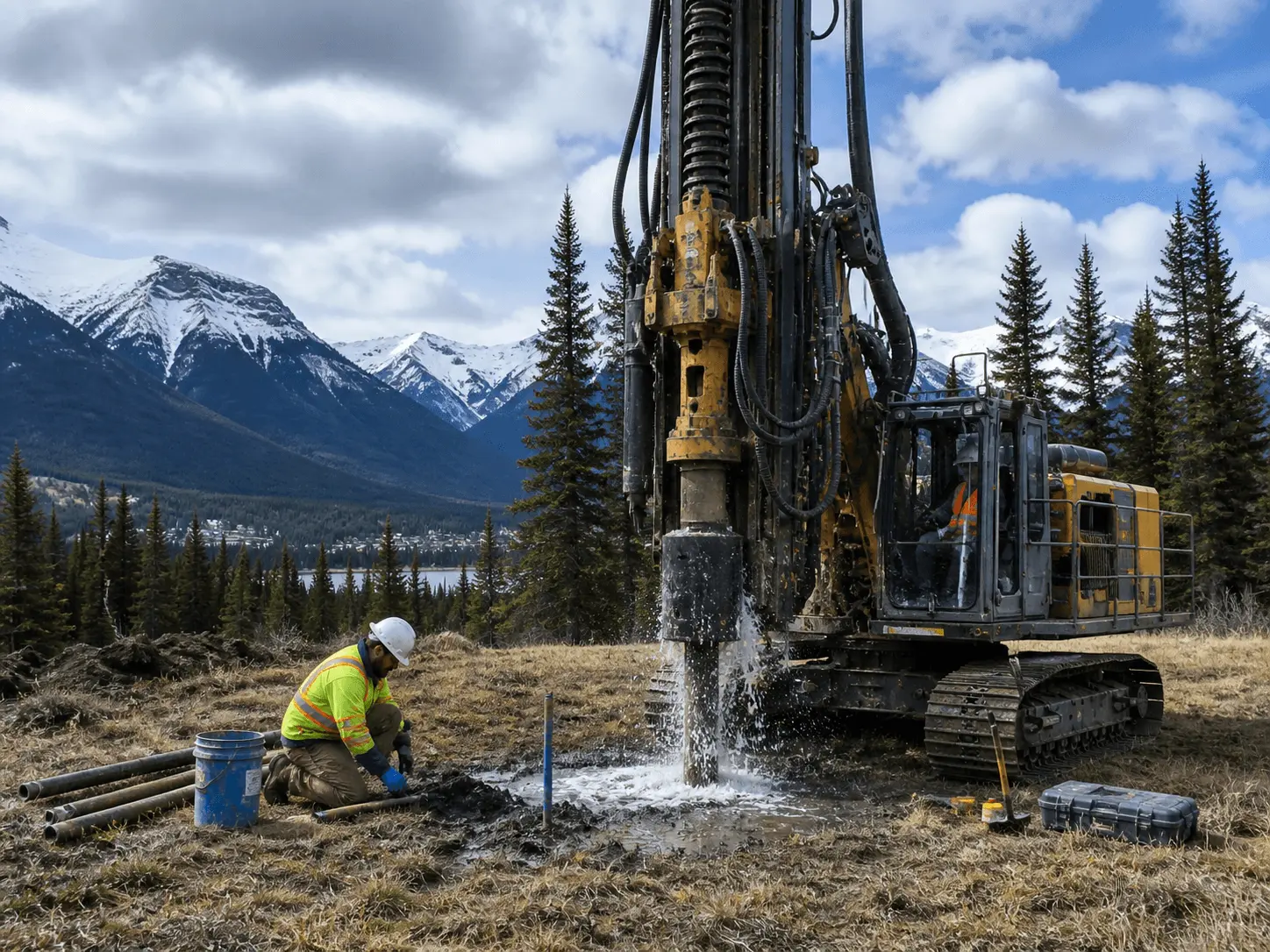
Direct rotary drilling in progress for efficient and precise groundwater well construction using continuous fluid circulation.

Direct Rotary Drilling Method

The direct rotary drilling method increases drilling speed and allows deeper penetration across various geological formations. In this process, a rotating drill bit creates the borehole while continuously circulating drilling fluids removes cuttings efficiently.

As the bit penetrates the formation, it connects to a drill pipe string that transmits rotational energy from the rig. At the same time, pumps send drilling fluid downward through the drill pipe and release it through jets in the bit. The fluid then flows upward through the annular space, carrying cuttings to the surface.

At the surface, workers direct the fluid into settling pits where solids separate from the mixture. After this process, the system recycles the cleaned fluid back into circulation to maintain continuous drilling operations.

Before 1920, early rotary drilling systems—commonly called whirler rigs—used the casing as the drill pipe. Operators performed cutting using a serrated shoe, while circulation depended on pumped water and natural formation sealing.

Later, in the 1930s, engineers adapted shot-hole rotary drilling equipment from seismic and oil exploration for water well drilling. However, these systems could not handle large-diameter wells due to limited capacity. As a result, manufacturers developed truck-mounted rigs to achieve deeper drilling and improve overall efficiency.

Drill Bit Types

In direct rotary drilling, different types of bits are used depending on formation conditions:

  • Drag bits are used in soft formations such as clay and sand, where a shearing action is effective.
  • Roller cone bits are applied in harder formations, where crushing and chipping are required.
  • Tricone bits are commonly used as all-purpose tools due to their versatility.

Additionally, jet nozzles are incorporated to improve cutting removal and cooling efficiency.

Drill String Assembly

The drill string consists of the following components:

  • Drill bit
  • Drill collars
  • Drill pipe
  • Kelly (for table-drive systems)

Drill collars add weight near the bit to help maintain straight boreholes and achieve proper penetration rates. Operators install stabilizers to reduce deviation, while carefully controlling fluid flow to prevent blockage.

Drill Pipe and Kelly System

Manufacturers produce drill pipe in standardized lengths designed to withstand high circulation pressures. In table-drive systems, operators use a kelly to transfer rotational force through the rotary table.

In contrast, top-head drive systems remove the need for a kelly because a hydraulic motor directly applies rotation. As a result, efficiency improves and handling time is reduced.

In the direct rotary drilling process, drilling fluid plays a critical role in maintaining borehole stability. Operators pump the fluid downward through the drill pipe, and it circulates upward through the annulus, carrying cuttings to the surface.

At the surface, workers process the fluid in settling pits before recirculating it back into the system. For shallow wells, they use small portable pits, while deeper wells require larger-capacity pits or excavated mud pits to handle higher volumes of drilling fluid.

During operation, drillers carefully control rotation speed and weight on the bit based on formation resistance. They avoid excessive pressure to prevent deviation or crooked holes.

In deeper wells, operators hold back part of the drill string weight to prevent overloading the bit. As a result, drilling efficiency is optimized by balancing rotation speed, applied pressure, and fluid circulation.

Rod handling, known as tripping in and tripping out, forms a major part of drilling operations. Operators add or remove drill rods depending on depth and bit conditions.

Before adding rods, they maintain fluid circulation to prevent sand locking. Workers use slips, elevators, and sand lines to handle pipe sections safely. In modern rigs, especially top-head drive systems, automation speeds up this process and improves overall efficiency.

Advantages

  • High penetration rates in most formations
  • Minimal casing requirements
  • Fast rig mobilization and demobilization
  • Easy installation of well screens
  • Efficient deep drilling capability

Disadvantages

  • High equipment and maintenance costs
  • Requires skilled operators
  • Limited mobility in difficult terrain
  • Drilling fluids may affect certain formations
  • Reduced efficiency in extreme cold conditions
  • Requires advanced fluid management knowledge

CONTACT US NOW!

1-403-845-6676

info@findwellwater.ca

3811-53 Ave Rocky Mountain House, Alberta T4T 1V4 Canada 

If you would like to use our services, please email us and we will provide a DocuSign agreement along with a customized estimate. Waterfind is based in Rocky Mountain House, Alberta, and we travel almost anywhere in Canada to assist clients with groundwater location services.